
Preserve the Past. Protect the Future.
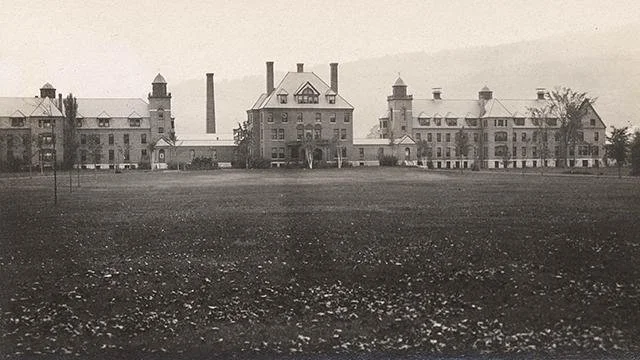
Historic Vermont State Hospital campus, Waterbury, Vermont.
The Land
Stanley and Wasson Halls disappeared in 2021.
Their history did not.
Before we determine what this land should become, we must understand what it has been.
At the intersection of Park Row and Randall Street in Waterbury, Vermont, lies a piece of land with a history extending well beyond its present boundaries.
For more than a century, this land formed part of the Vermont State Hospital campus — an institution that profoundly shaped Waterbury, the lives of generations of Vermonters, and the state's approach to mental health care.
It is a history of architecture, community, public service, institutional care, and human experiences that deserve to be remembered. It also includes difficult chapters in Vermont's history that should not be overlooked.
More recently, the property has been shaped by the destructive force of the Winooski River, the transformation of the State Hospital campus, and decisions made in the aftermath of Tropical Storm Irene.
Today, its future is once again under consideration.
This land is considerably more than a vacant 2.3-acre parcel. Its documented history, place in the National Historic Register, and contributions to the State Hospital Historic District and Waterbury Historic District deserve to be part of the conversation about its future.
The Past: Stanley and Wasson Halls
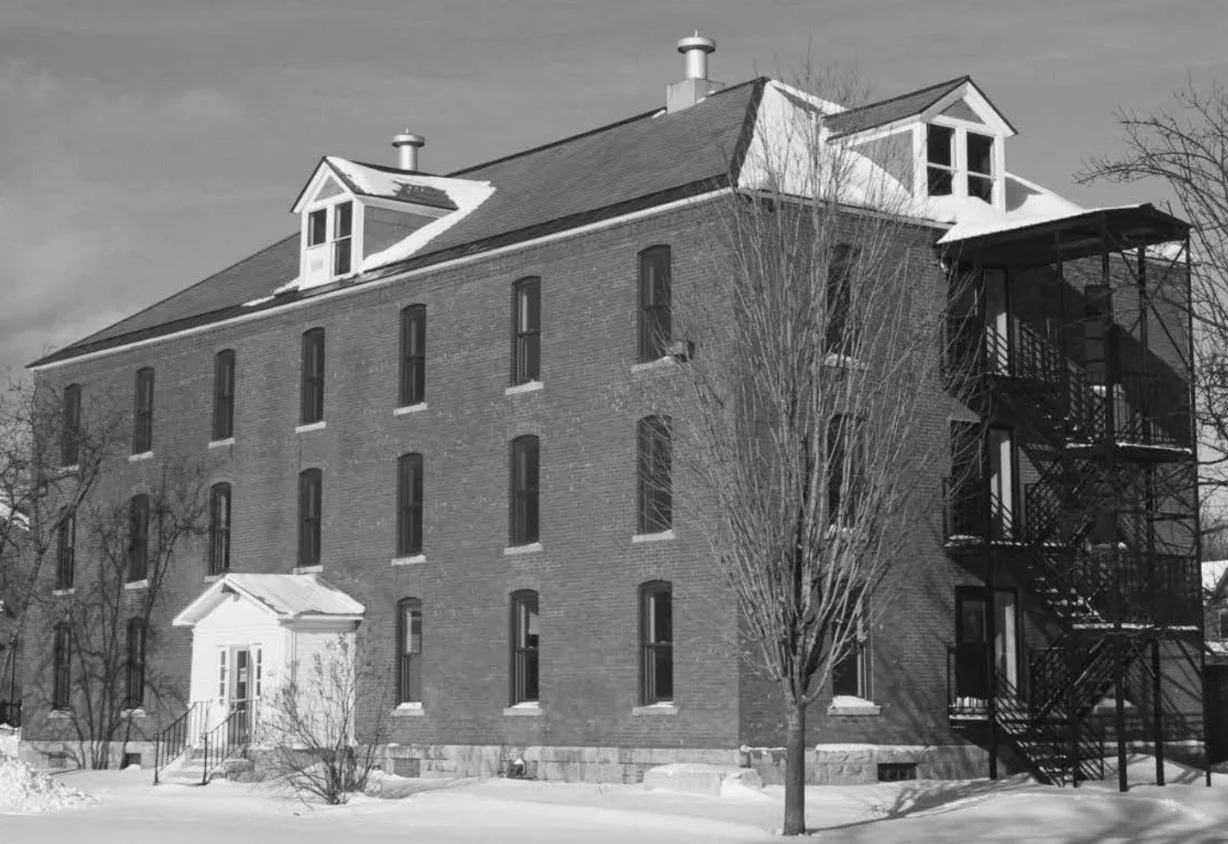
Wasson Hall
1901–2021
The Original Nurses' Home
Construction of Wasson Hall began in 1901 during a period of significant expansion at the Vermont State Hospital. Originally known as the Nurses' Home, the building accommodated forty nurses and provided staff with a place of residence away from the demands of the hospital wards.
An underground passage connected the residence to the main hospital, allowing attendants to travel between the buildings without exposure to inclement weather.
The three-story building featured Classical Revival architectural details, a slate roof, arched window openings, and a granite foundation.
It was named in honor of Dr. Watson L. Wasson, who served as superintendent of the Vermont State Hospital from 1916 to 1918.
Following the construction of Stanley Hall in 1948, Wasson Hall was converted to housing for married staff. In later decades, it was adapted for use as state offices.
Wasson Hall underwent extensive renovations in 2009. Just two years afterward, Tropical Storm Irene inundated the building, with floodwaters reaching two feet above its first floor.
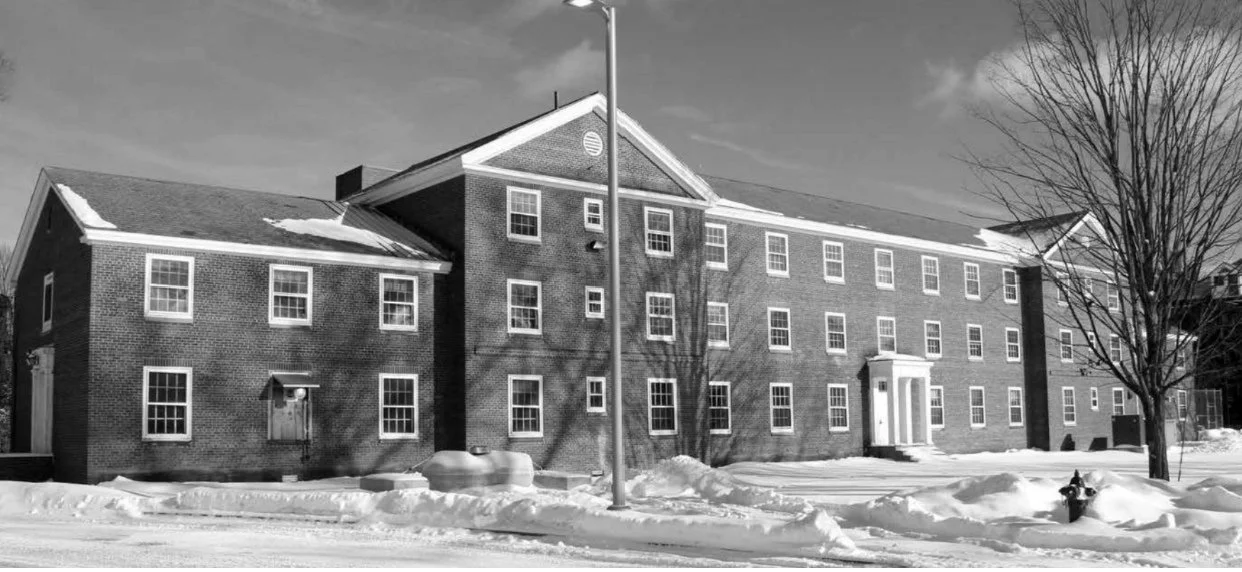
Stanley Hall
1948–2021
The Next Generation
Designed in 1946 by Vermont architect Payson Rex Webber and completed in 1948, Stanley Hall was constructed as part of the hospital's postwar modernization program.
Built alongside Wasson Hall, the new nurses' residence addressed the growing need for staff accommodations at the institution.
The three-story brick building reflected the Colonial Revival architectural style, with a symmetrical façade, classical entrance detailing, and distinctive gabled wings.
Stanley Hall was named in honor of Dr. Eugene A. Stanley, who served as superintendent of the Vermont State Hospital from 1918 to 1936.
As the institution evolved and its residential needs changed, Stanley Hall was eventually adapted for state government offices.
During Tropical Storm Irene in August 2011, Stanley Hall sustained extensive flood damage, affecting its foundation, frame and interior finishes from the basement to two feet six inches above the first floor.
The building was not reoccupied before its demolition in 2021.
A Renewed Recognition of Historical Significance
Although Stanley and Wasson Halls were previously classified as non-contributing resources within the 1978 Waterbury Village Historic District, their historical significance was formally reconsidered in 2016.
The establishment of the separate Vermont State Hospital Historic District recognized both buildings as contributing historic resources, acknowledging their place in the evolution of institutional care and architecture in Vermont.
The National Register designation encompassed a 36.3-acre district with defined geographical boundaries, including Stanley and Wasson Halls and their surrounding grounds. The nomination recognized the significance of the campus as a whole, including its architecture, landscape and historical setting.
“The district retains integrity of location, setting, design, materials, workmanship, feeling and association.”
— National Register of Historic Places Registration Form, 2016
This recognition came five years after Tropical Storm Irene and the extensive transformation of the hospital campus.
In 2021, just five years after their recognition as contributing historic resources, both Stanley and Wasson Halls were demolished.
No new structures were proposed as part of the demolition project. The approved plans called for the land to be restored to an open grassed field and landscaped for flood mitigation at the campus.
Sources: Wasson Hall Historic Resource Documentation Package and the National Register nomination. Vermont State Hospital Historic District — National Register of Historic Places Registration Form, 2016 Act 250 Demolition Permits 5W0431-12 and 5W1012-3 — March 17, 2021Beyond the Buildings
A Difficult History
Preserving history means acknowledging all of it, including the chapters we may wish had never been written.
The history of the Vermont State Hospital includes difficult chapters in Vermont's approach to mental health care and institutionalization.
Dr. Eugene A. Stanley, for whom Stanley Hall was named, was a documented advocate of Vermont's eugenics movement.
In 2021, the Vermont General Assembly formally apologized for the harm caused by state-sanctioned eugenics policies and practices. That same year, Stanley and Wasson Halls were demolished.
Beyond the architecture are the stories of individuals who lived and worked at the institution. Their experiences, histories and dignity deserve recognition and remembrance.
“The legacy of the eugenics movement continues to influence some of Vermont’s current policies and legislation.”
Vermont General Assembly — Joint Resolution R-114, 2021
The Land Today
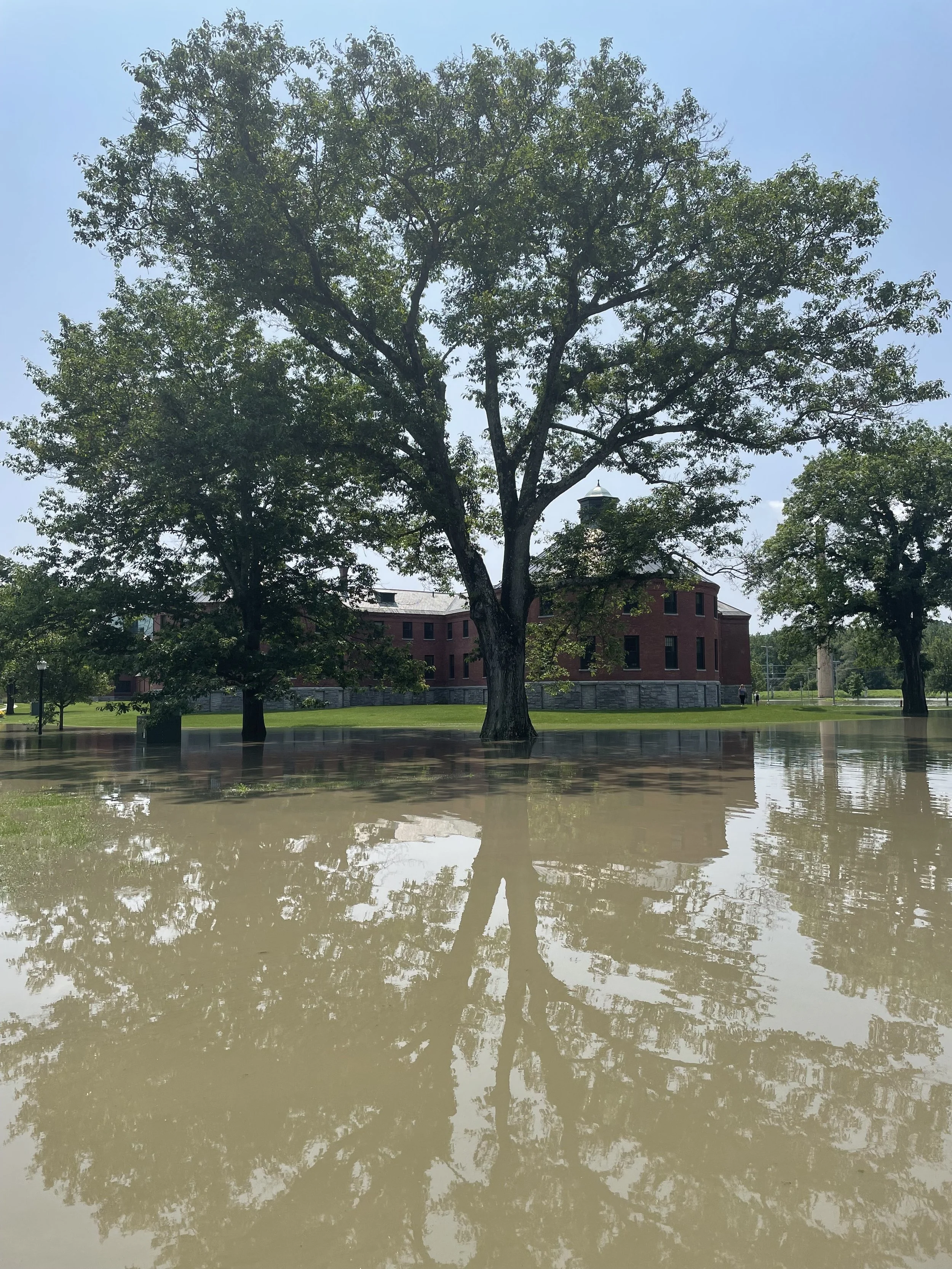
The buildings are gone, but the land's relationship with the river remains.
Today, the former Stanley-Wasson property consists of open green space and an existing parking area within Waterbury's historic village, The State Hospital Historic District and a federally designated Special Flood Hazard Area.
The flooding of July 2023 served as a reminder that removing structures from the floodplain does not remove the potential for flooding.
As Waterbury considers the future of this property, its historical significance, environmental function as floodplain storage and potential public value deserve thoughtful consideration.
If you had a choice, what should the next chapter of this land's history be?